Gear & Tips
What worked on the road
A planning resource pulled from the actual choices and outcomes of this trip — the rental, the connectivity hack, the kid park pass, the cost breakdown, and the gluten-free restaurants that kept the family fed.
First-timer review
Turo — booked through the app, picked up at the hotel curb
Cautiously positive. We needed a specific size of vehicle, a hybrid powertrain, and a handoff that didn’t add an airport-counter scrum to the back end of a redeye-into-Denver day. Turo solved all three.
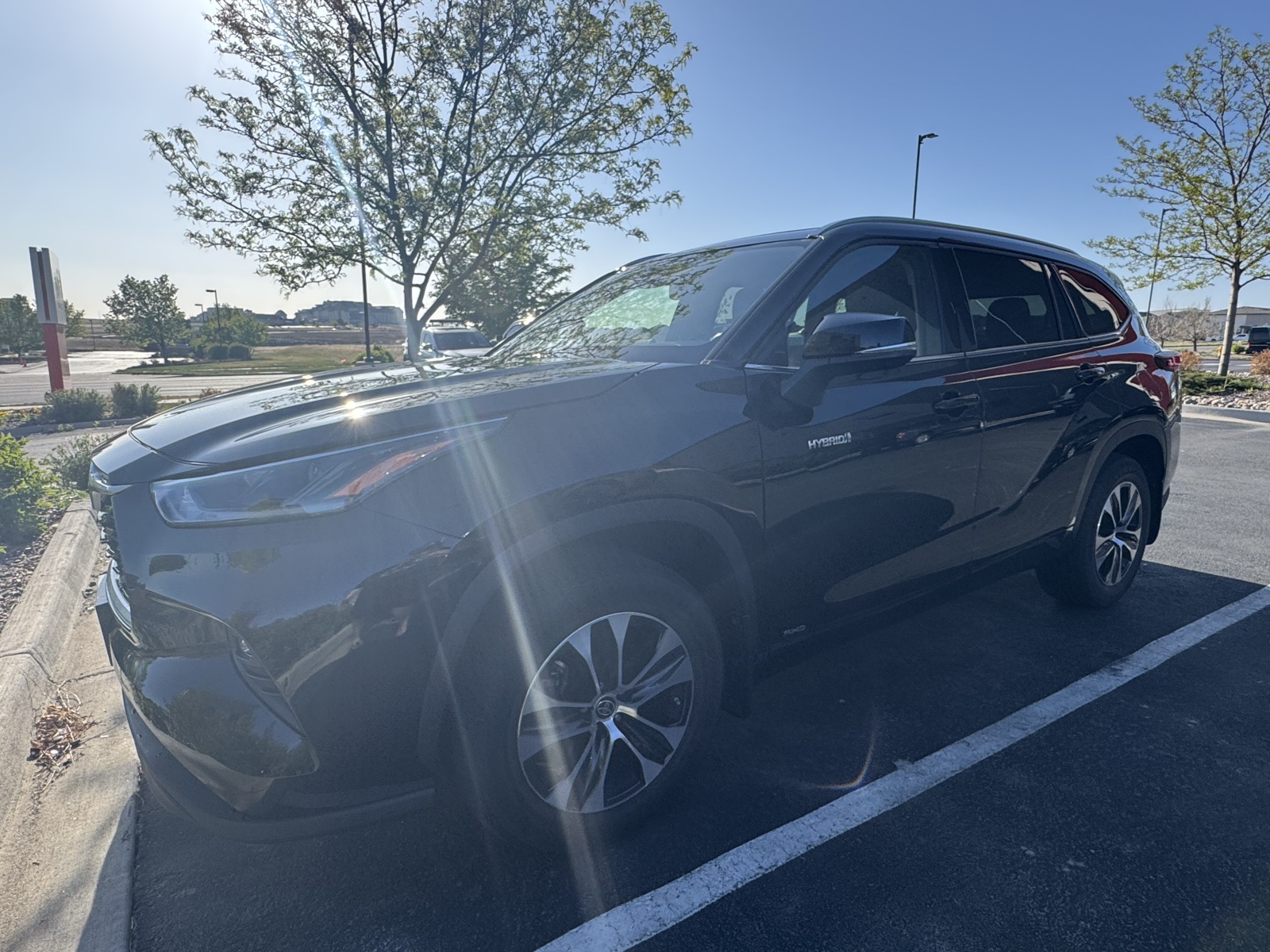
We booked a 2026 Toyota Highlander Hybrid for 5 days (Apr 19 – Apr 24) at $415.06 prepaid, with a 1,200-mile cap and a $0.26-per-mile overage rate. No Turo insurance taken. Host “Creek” — 4.9 stars over 149 trips on the platform.
Why Turo over a traditional rental
- A specific vehicle. A family-sized SUV with the cargo room for four people, four bags, and a week’s worth of road groceries. Traditional rentals promise a category, not a car.
- A hybrid specifically. Pre-trip research said hybrids were “subject to availability” at the major counters. Turo lets you book the actual car.
- Hotel delivery. Pickup at the curb of the Avid the morning after we landed beat the airport-counter rush at DEN.
The hotel-curb handoff (with one snafu)
The handoff slipped to 10:18 AM (we asked for “by 9 at the latest”) and Creek arrived at the Home2 Suites by Hilton across the way before we sorted out we were at the Avid. ~30 minutes lost, no real harm done. The hotel-delivery pattern was still a clear win: no bag-haul to a rental counter, no Hertz-vs-Avis price-shopping kids melting down — just walk out the front door with the car waiting.
The drop-off — lockbox in the armrest
Tolls bill via the license plate (Creek confirmed up front). Drop-off was a lockbox in the armrest at the Aurora T-Blue lot — park anywhere, lockbox on the driver-side windshield, no in-person inspection. Frictionless. The post-drop-off communication has been quiet, but no problem signals.
The mileage math
We drove 1,408 miles against a 1,200-mile cap — 208 over × $0.26 = a $54.08 expected overage charge. All-in across 5 days that’s ~$469 for the rental, or about $94 a day for a current-year hybrid SUV with hotel delivery. If you’re flying into Denver for a parks roadtrip and want a hybrid specifically, this is the playbook.
Connectivity
Starlink Mini in the cabin
Continuous high-speed connectivity in the remote western areas where cell service was sparse. Live nav, on-the-fly trip research, and the ability to keep planning while driving — instead of “we have to figure it out before we lose signal.”
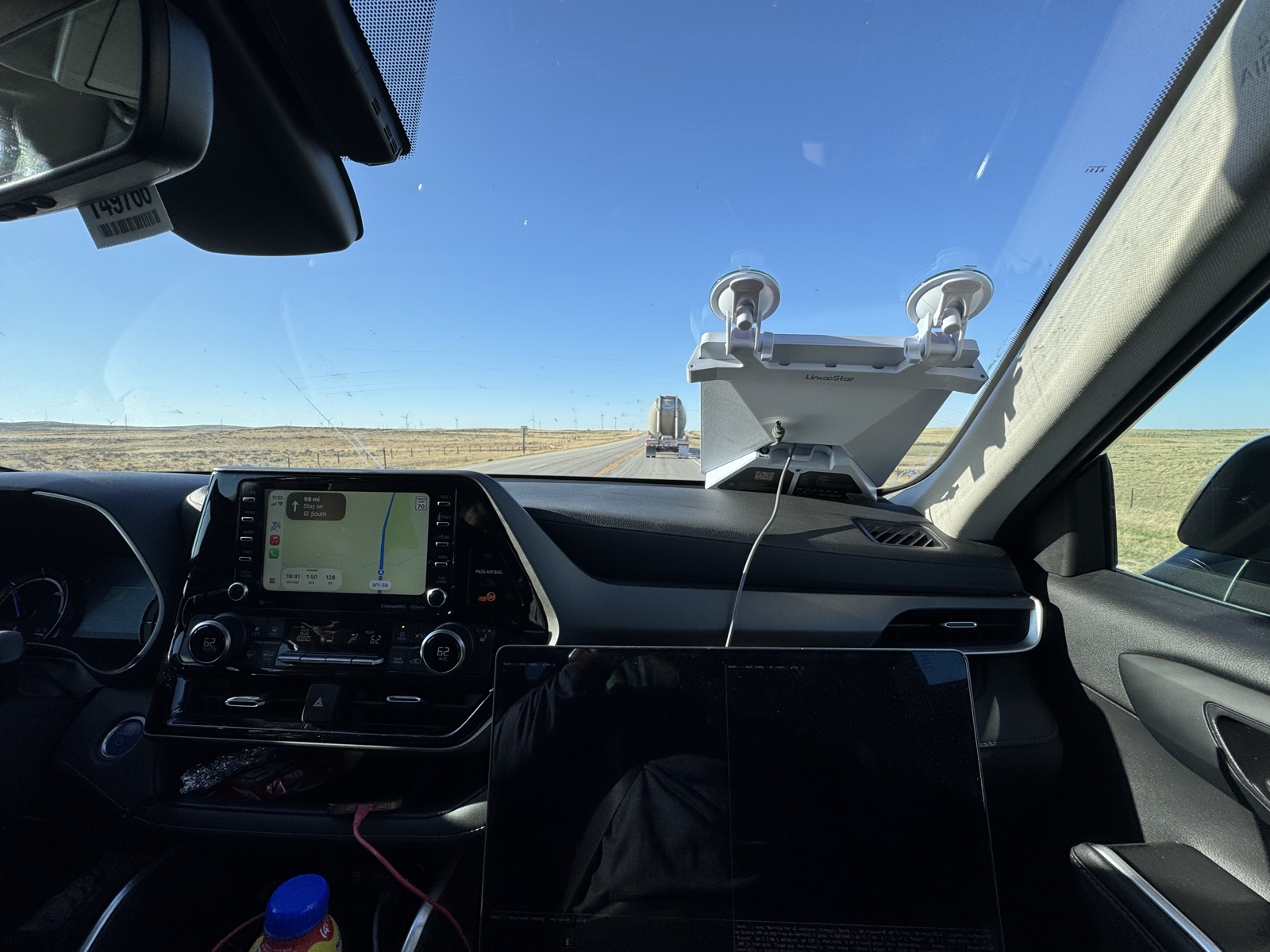
Cell-coverage gaps where Starlink earned its place on this trip:
- Devils Tower NM and the Belle Fourche area
- Custer State Park interior — the Wildlife Loop
- Wind Cave NP / Hot Springs route
- Stretches of US-385 and SD-79
- Inside Badlands NP (parts)
- Estes Park and the RMNP backcountry
By the numbers
- 59 GB across the trip month, all within the Roam plan’s included data — no overage
- 13 GB on the two heaviest days — Apr 21 (Black Hills scenic byways) and Apr 24 (RMNP / drive-to-airport)
- ~9 GB/day average across 6 active driving days (56.5 GB / 6)
- ~90% of the month’s total data was consumed during the trip itself
If you’re planning a parks-and-prairie route through Wyoming, the Black Hills, or the Badlands — and you want navigation, weather, and “where do we eat tonight?” research that doesn’t rely on cellular — Starlink Mini is worth the kit cost.
I brought the Starlink Mini as a trial run for an Australia trip later this year, where I'll be working from the road. What I didn't expect was how much we'd rely on it on this trip.
I'd tested it at home, so I knew it could connect in principle. The first time I tried to use it for real, I learned that the Starlink Mini doesn't have an on/off button — power equals on — and the small indicator light that tells you it's locking on is partially blocked by the PeakDo battery sitting underneath. So you plug it in and sit there guessing whether anything is working. The lesson, learned the hard way: be patient. Once it locks on, it's seamless.
My first instinct was to plug the dish straight into the car's 12V outlet using the Lehao-Tech adapter, which works fine until the car turns off. At every viewpoint stop, gas station, and visitor-center pause, the dish lost power and had to re-acquire a satellite when it came back. Lock-on takes a minute, and a minute when you're trying to look up a restaurant or check a forecast feels longer.
The fix was to route power through the PeakDo LinkPower 2 power bank, which has pass-through charging: the car charges the battery, the battery powers the Starlink, and the Starlink stays on through ignition cycles. The only footgun: the way you turn the dish off is by unplugging it from the battery. Forget once and the battery drains overnight while nothing's even using it. (I forgot once.)
Connecting the family's devices was the easy part. The Wi-Fi network the dish broadcasts is just a Wi-Fi network — we'd saved it on everyone's phones during the home trial, so once the Starlink was up, the kids' Switch and Sierra's phone connected automatically. CarPlay ran through my phone the whole trip. Our family cell plan caps shared data at about 10 GB before overage charges kick in, so on a 56-GB-usage week the Starlink didn't just save trouble — it kept us out of overage charges that would have covered most of a month of the Roam plan on their own.
Speaking of the plan: the Starlink Roam tier I activated was $50 per month for 100 GB of included data. We used 56.5 GB across the six active driving days, well under cap. I paused the plan before the trip, but pauses kick in after your current billing cycle, so you pay for the month you're actually using it. Starlink also offers a $5/month standby mode if you want to keep the line warm without an active subscription. Pause-and-resume is the right play for trip-only users; standby works if you want the option of turning service back on quickly.
What I packed
The kit that earned its place:
- Starlink Mini — the dish itself.
- Lehao-Tech 12V/24V Car Charger — 100W waterproof adapter with a 3-meter Type-C-to-DC cable; ordered on Walmart. Lived in the accessory port and powered the dish all trip.
- PeakDo LinkPower 2 Power Bank — the single most useful accessory. Pass-through charging is the difference between “Starlink works in the car” and “Starlink works despite the car turning off”.
- XTAR Starlink Mini Carry Sleeve — soft sleeve, not a hard case, so don't drop it. But it held the dish plus all the cables and made packing into a backpack workable.
Brought, didn't use, would leave home next time:
- Veritas Vans external-mount kit (~$150 across the mount kit, the Peakdo battery adapter, a four-pack of magnet attachments, and a bolt-on handle). Designed to mount the dish to the outside of the car using strong magnets. I was nervous about it coming off at highway speeds, and the rental Highlander didn't have a roof rack to use the rack attachment anyway. The dish on the dashboard worked fine. The external kit just added weight to my checked bag for the round trip.
- FONKEN suction-cup dashboard mount — used Day 1, abandoned after that. Blocked the windshield view a bit, and the dish sat fine on the dash without it.
Bonus, not Starlink-specific: the Anker 25,000 mAh Laptop Power Bank with triple 100W USB-C ports and built-in retractable cables could top up the PeakDo or charge a laptop if needed. The Anker rode in Jacqui's bag, the PeakDo plus my laptop in mine. No TSA issues at either airport with either pack.
Will I take this on the next family roadtrip? Yes, 100%. We're going to Australia later this year and I'll be working from the road, and based on this trip I'm confident the kit holds up.
If you're planning a similar parks-and-prairie route — anywhere cellular gets thin and the long stretches of driving with kids need to feel less like a slog — here's the recommendation in one sentence: having a Starlink Mini might be an expense you're not thinking about, but being able to provide consistent high-speed internet on the long drive kept the kids busy when there wasn't much to see, and made the travel more enjoyable for everyone.
Trip planning
AI as a route & landmark partner
The full route was built with ChatGPT — landmark list, day-by-day driving estimates, and (most usefully) a single Google Maps URL with all of Iron Mountain Road’s key waypoints baked in so the pigtail bridges and the Mt-Rushmore-framing tunnels couldn’t be missed.
What it did well
-
Generating Google Maps URLs from waypoint lists
— the format is
maps/dir/A/B/C/...and saves a lot of pin-dropping when you want the route to thread through a specific scenic byway, not just “go from A to B.” - First-pass research on regional landmarks — fast way to surface Wall Drug, Minuteman Missile NHS, Crazy Horse, the Wildlife Loop, Iron Mountain Road, and which towns have what.
- Cross-checking driving distances between candidate overnights, so you can see where the long days will land before you book the lodging.
What we’d ask differently next time
- Be explicit about dietary constraints up front. ChatGPT proposed five Rapid City restaurants without flagging gluten-free friendliness; we ended up at Nanna’s Cafe — not on its list — because that’s where the GF travel actually worked.
- Be explicit about kid-pacing. The pre-trip plan had Day 3 as a tight Devils Tower → Spearfish → Rapid City run (~145 miles); the actual day with the Spearfish Canyon detour ran ~220 miles, and the family was over it by the end.
- Treat AI output as a starting list, not a checklist. The good ideas survived; the rest got cut as the trip met reality.
The meta-methodology — how the ChatGPT planning chats fed into this journal alongside booking emails, photo EXIF, and credit-card transactions — lives in Section 4: How this was built.
Park entry
Every Kid Outdoors — the 4th-grader park pass
Edrik is a 4th-grader. The federal Every Kid Outdoors program issues a free annual pass to all 4th-graders, valid for that school year (Sept 1–Aug 31). The pass covers the 4th-grader plus any accompanying adults in the same private vehicle at NPS sites.
What it covered on this trip
- Devils Tower NM — ~$25/vehicle entry, waived
- Badlands NP — ~$30/vehicle entry, waived
- Wind Cave NP — ~$25/vehicle entry, waived (cave tour itself was paid — $48 for 4 tickets)
- Rocky Mountain NP — ~$25/vehicle entry, waived (we did pay $28 at the Beaver Meadows visitor center for a gift-shop purchase)
Estimated savings: ~$80–$105 in entry fees, plus the trip would have been a much harder sell at the “is the fifth park really worth $25 more?” mental-math step without the pass. With it, every NPS site was a free door to walk through.
What it didn’t cover
- Mt Rushmore parking ($10) — federal site, but charges parking, not entry
- Crazy Horse Memorial ($30 entry) — privately operated
- Custer State Park — state-administered, not federal
- Wall Drug — not a park
If you’ve got a 4th-grader and parks anywhere on your itinerary, this is the highest-leverage tip in the whole trip.
Boston Logan workflow
C&J Bus — Seabrook to Logan, kids ride free
The boring, reliable answer to “how do you get a family of 4 to Logan from the North Shore without parking a car for a week?”
Round-trip for two adults and two kids: $104.00 — kids ride free with a paying adult. Pickup at the Seabrook station off I-95, drop-off terminal-by-terminal at Logan. ~75 minutes Boston-bound, longer in evening traffic on the return.
The math vs. driving and parking
Short-stay airport parking at Logan runs $40–$60 per day depending on terminal and lot — call it $300–$450 for an 8-day trip, plus ~95 minutes of driving each way and tolls. We parked at the C&J Seabrook station instead at $4.50/day — $31.50 total for the 7 nights the car sat there. All in: $104 bus + $31.50 parking = $135.50 to get the family to Logan and back, vs. ~$300–$450 in airport-parking fees alone, before counting fuel, tolls, and the don’t-have-to-drive-after-a-redeye benefit.
By the numbers
The cost breakdown
Flights, lodging, transport, food, groceries, activities — the full picture for a family of four for 8 days (Apr 18–25, 2026). Totals below assume the Cheyenne Little America $161.62 hot-water comp posts as promised.
| Category | Total | Notes |
|---|---|---|
| Flights | ~$1,680 | UA outbound BOS → EWR → DEN + JetBlue redeye DEN → BOS, including 2 carry-on bags ($100) on the JetBlue leg. |
| Lodging | ~$1,053 | Avid Hotel Denver ($145.15) + The Lodge at Moorcroft ($122.08) + Mary Jo’s Place 3 nights ($786.07). Cheyenne Little America excluded — comped for hot-water failure. |
| Rental car | ~$469 | Turo $415.06 prepaid + $54.08 expected overage (208 miles over the 1,200-mile cap). |
| Food | ~$670 | Restaurants, fast food, coffee. Anchor meals at Nanna’s, Redwater Kitchen, and Cafe de Pho Thai. |
| Groceries | ~$272 | Albertsons (Gillette WY) + 3 Safeway runs in Rapid City. Self-catering at Mary Jo’s pulled food costs down. |
| Fuel | ~$219 | 1,408 miles in a hybrid Highlander — nine fill-ups across Circle K, Maverik, Sinclair, Pilot, and Murphy. |
| Activities, parks & parking | ~$307 | Crazy Horse entry + gift, Mt Rushmore parking + info center, Badlands association, Wind Cave tour, RMNP visitor center, Wall Drug. |
| C&J Bus + Seabrook parking | $135.50 | Round-trip bus ($104, kids ride free) + $4.50/day parking at the Seabrook station × 7 nights ($31.50). |
| Total | ~$4,806 | Assumes the Cheyenne $161.62 hot-water comp posts. If it doesn’t, the total is ~$4,968. |
Gluten-free travel
The GF anchors of a parks roadtrip
Both Jacqui and Sierra eat gluten-free. That shaped the food map of the trip more than any other constraint — and made the difference between a fed family and a hangry one on the long driving days.
Strategy: anchor in larger towns
Spearfish and Rapid City, SD — both bigger than the touristy parks-side towns (Custer, Hot Springs, Wall) and both with one or more genuinely GF-friendly restaurants. We routed dinners and longer-form meals to those anchors, then ate light from the cooler or Mary Jo’s kitchen on the in-between days.
The Find Me Gluten Free app — learned about it at Nanna’s
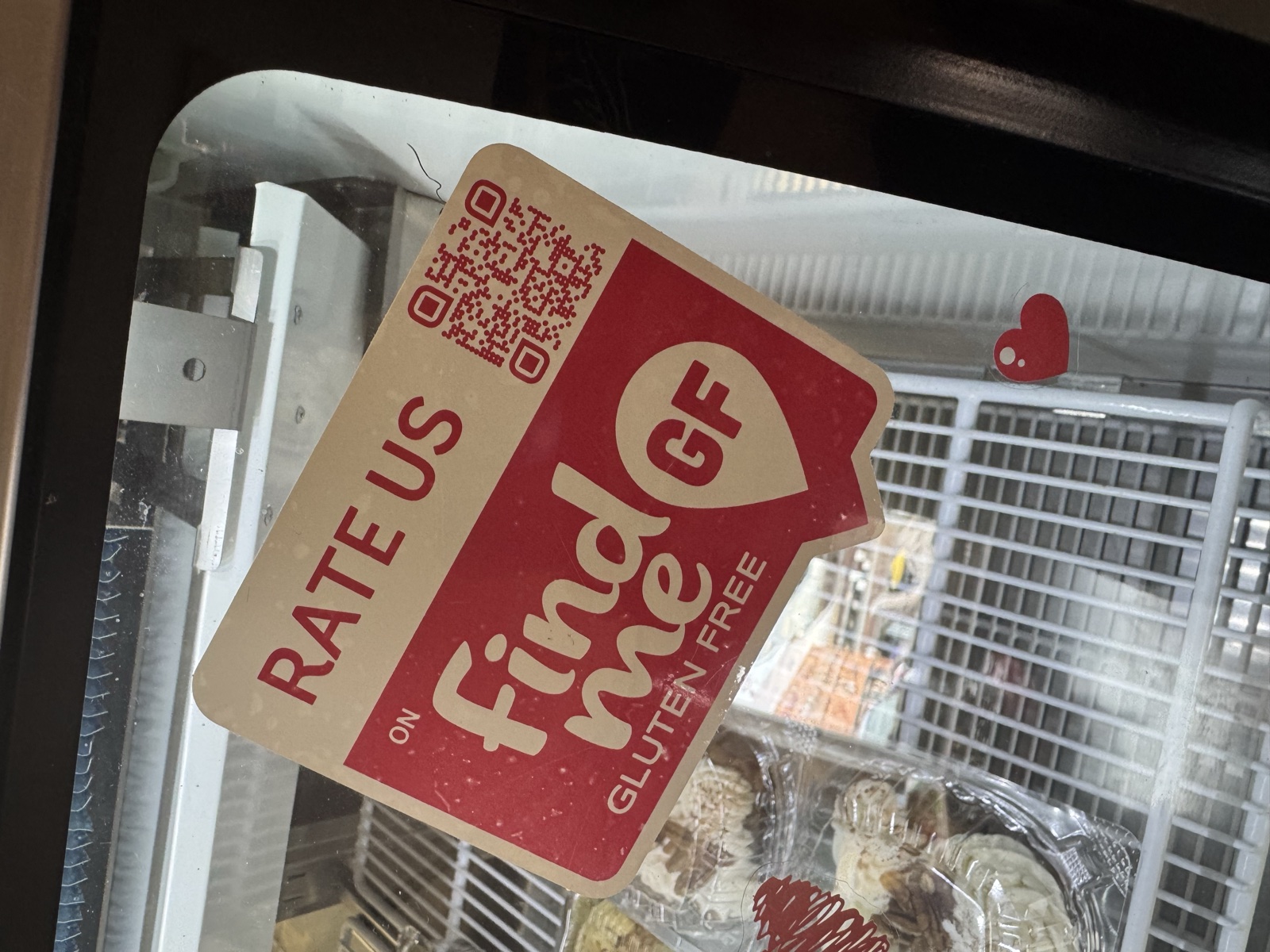
Walking up to the bakery case at Nanna’s Cafe and Bread Co. we saw a small “Rate us on Find Me Gluten Free” sticker stuck to the glass — and that’s how we discovered the app exists. findmeglutenfree.com is a crowdsourced GF-restaurant directory with reviews and cross-contamination notes from people who actually have to care about the answer. If we’d had it before the trip we’d have found Nanna’s ourselves instead of stumbling onto it; on every parks roadtrip from here on out it’s the first install.
The restaurants that earned a return visit
- Nanna’s Cafe and Bread Co. — Rapid City, SD. A bread company with gluten-free bread is a slightly delightful contradiction; the mid-trip Wednesday lunch ($101.87 for the family) made the trip’s GF travel feel solved — and the bakery case is also where the Find Me Gluten Free app entered our lives.
-
Redwater Kitchen — Spearfish, SD.
Lunch stop on Day 3 looping back through Spearfish after
the morning’s Devils Tower run and the canyon detour. Worth
the drive any time you’re close.
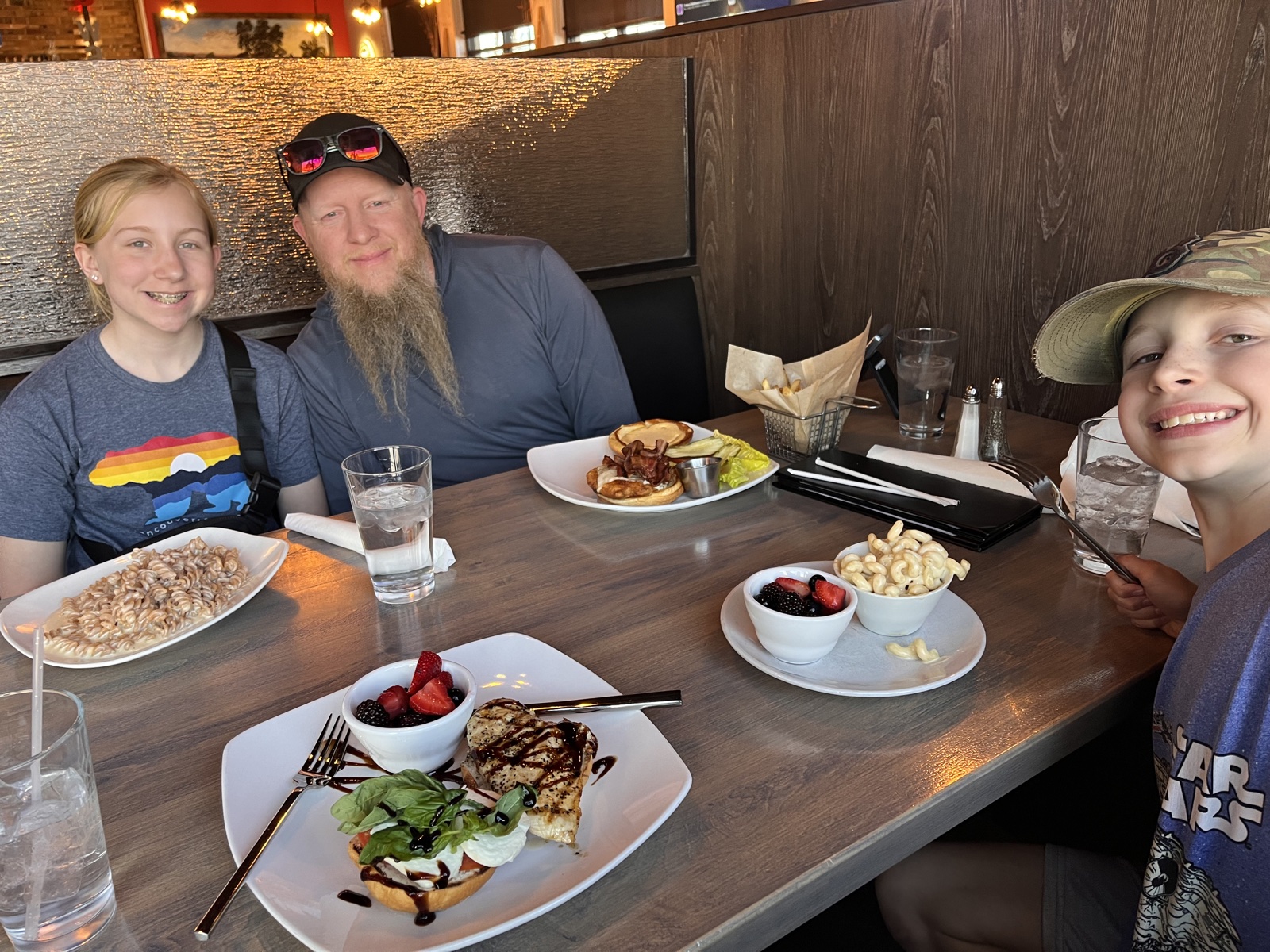
Lunch at Redwater Kitchen, Spearfish, SD — Day 3, ~2:36 PM, looping back into Spearfish on the canyon-detour day. - Cafe de Pho Thai — Estes Park, CO. Day-7 Pho stop on the RMNP detour. Pho is structurally GF-friendly (rice noodles, plain broth, fish sauce); a reliable answer when you don’t know what else a town has.
Backup pattern: the kitchen at Mary Jo’s
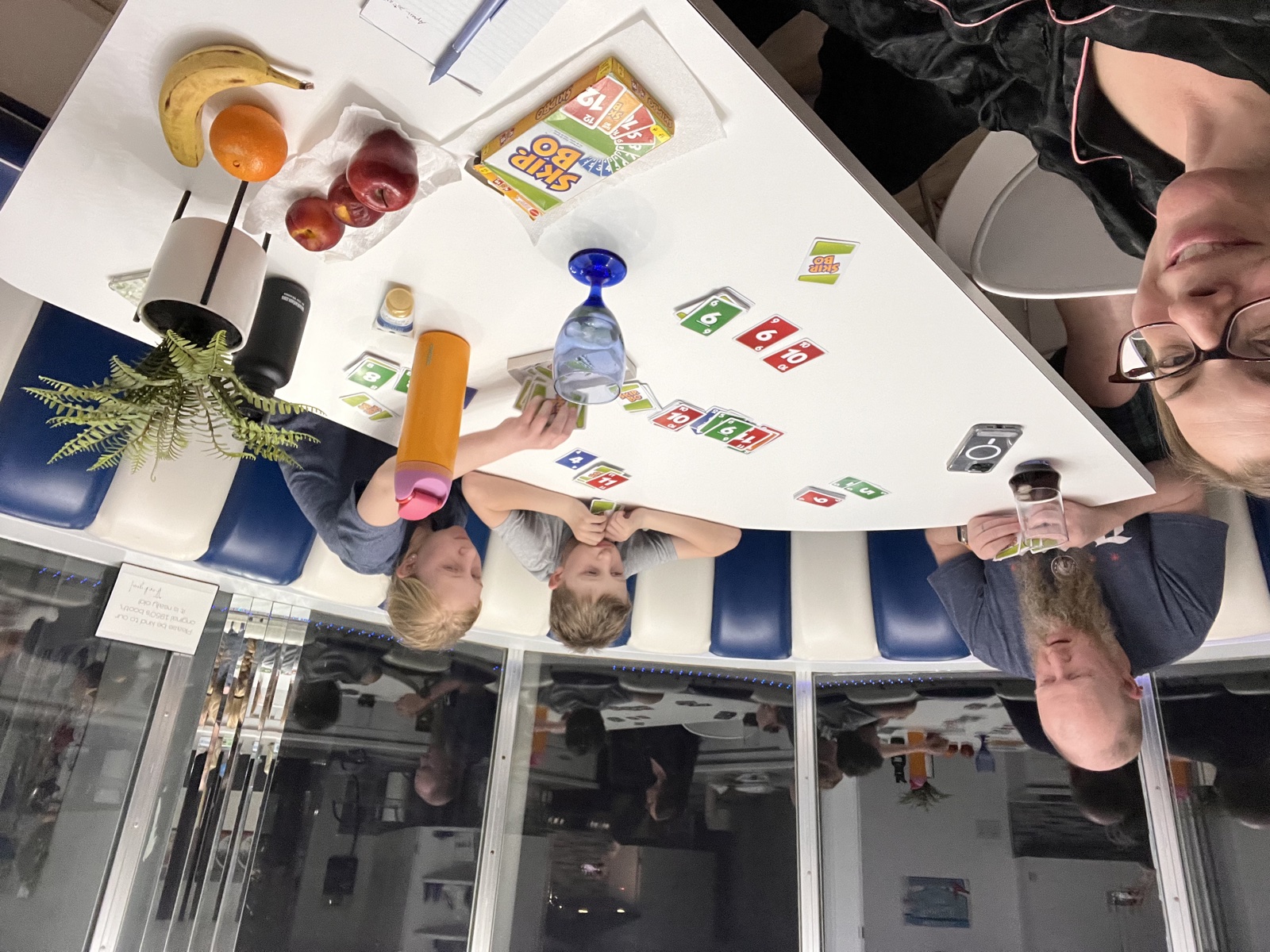
Three Safeway runs in Rapid City (~$189 total) for breakfasts, snacks, GF crackers and bars, and trail food. The full kitchen at Mary Jo’s earned its keep — the listing’s stocked-kitchen amenity isn’t just a bullet on the page.
What to ask any restaurant
- Is the fryer dedicated GF? (If the answer is “no”: skip the fries.)
- How do you handle cross-contamination on the prep line?
- What about dressings and marinades? (Most contain wheat-based ingredients.)
The honest answer is more useful than the hopeful one.
If you want to copy the trip
Recommendations
The wins worth recommending. Links go straight to the merchants.
- Turo — specific vehicle + hotel delivery, perfect for Denver-area parks roadtrips
- Starlink Mini — continuous high-speed connectivity through cell-coverage dead zones
- Find Me Gluten Free — crowdsourced GF-restaurant directory; the first install for any GF-traveling family
- Mary Jo’s Place — Rapid City Airbnb — 5-star, 3 nights, full GF-friendly kitchen, central to the Black Hills loop
- The Lodge at Moorcroft, WY — on-site Grazers restaurant for the kids-in-room-with-TV parents-dinner pattern
- Avid Hotel Denver Airport — free shuttle, easy on/off DEN, fine for a 1-night gateway
- Stone Mountain Lodge — Lyons, CO — Front Range wedding venue; where Jacqui and I got married, and the editorial center of Day 7’s routing
- JetBlue 0994 (DEN → BOS redeye) — cheaper than a daytime, sleep through the flight home
- Nanna’s Cafe — Rapid City, SD — the GF anchor restaurant
- Cafe de Pho Thai — Estes Park, CO — Day-7 Pho stop on the RMNP detour
- Redwater Kitchen — Spearfish, SD — the Day-3 lunch stop on the Spearfish Canyon detour