Day 4 · Tuesday, Apr 21, 2026
Black Hills scenic byways
Mt Rushmore in the morning, Iron Mountain Road's pigtail bridges, Custer's Wildlife Loop bison, and Crazy Horse Memorial — then back to Mary Jo's for the night.
Day 4 was the day we'd picked for the weather. The forecasts had Tuesday clear and Wednesday possibly cloudy, and we didn't want to drive to Mt Rushmore and Crazy Horse only to find the views washed out. So we used the sunny day for the monuments — and the day turned out to have two surprise highlights between them that we hadn't planned on.
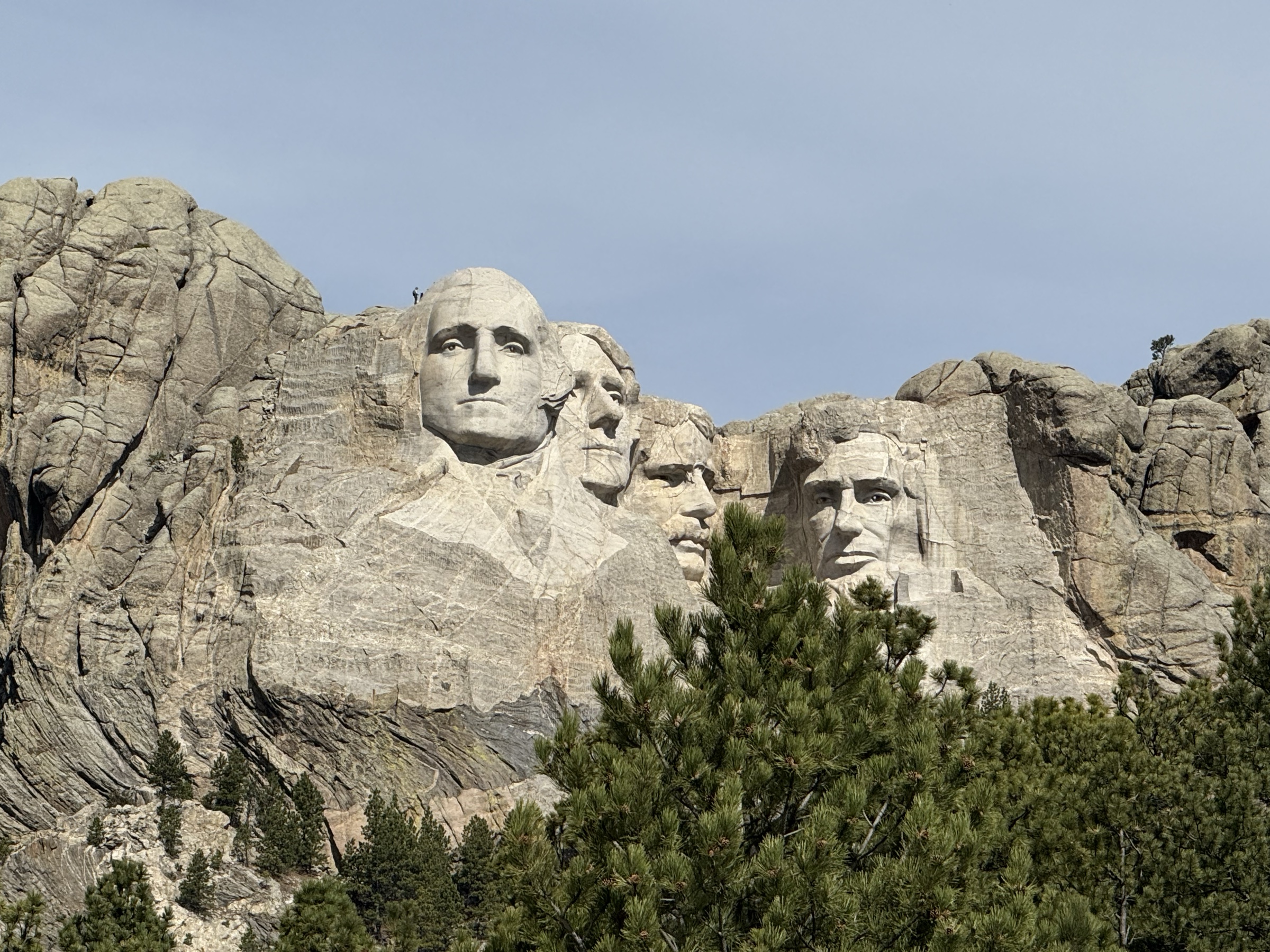
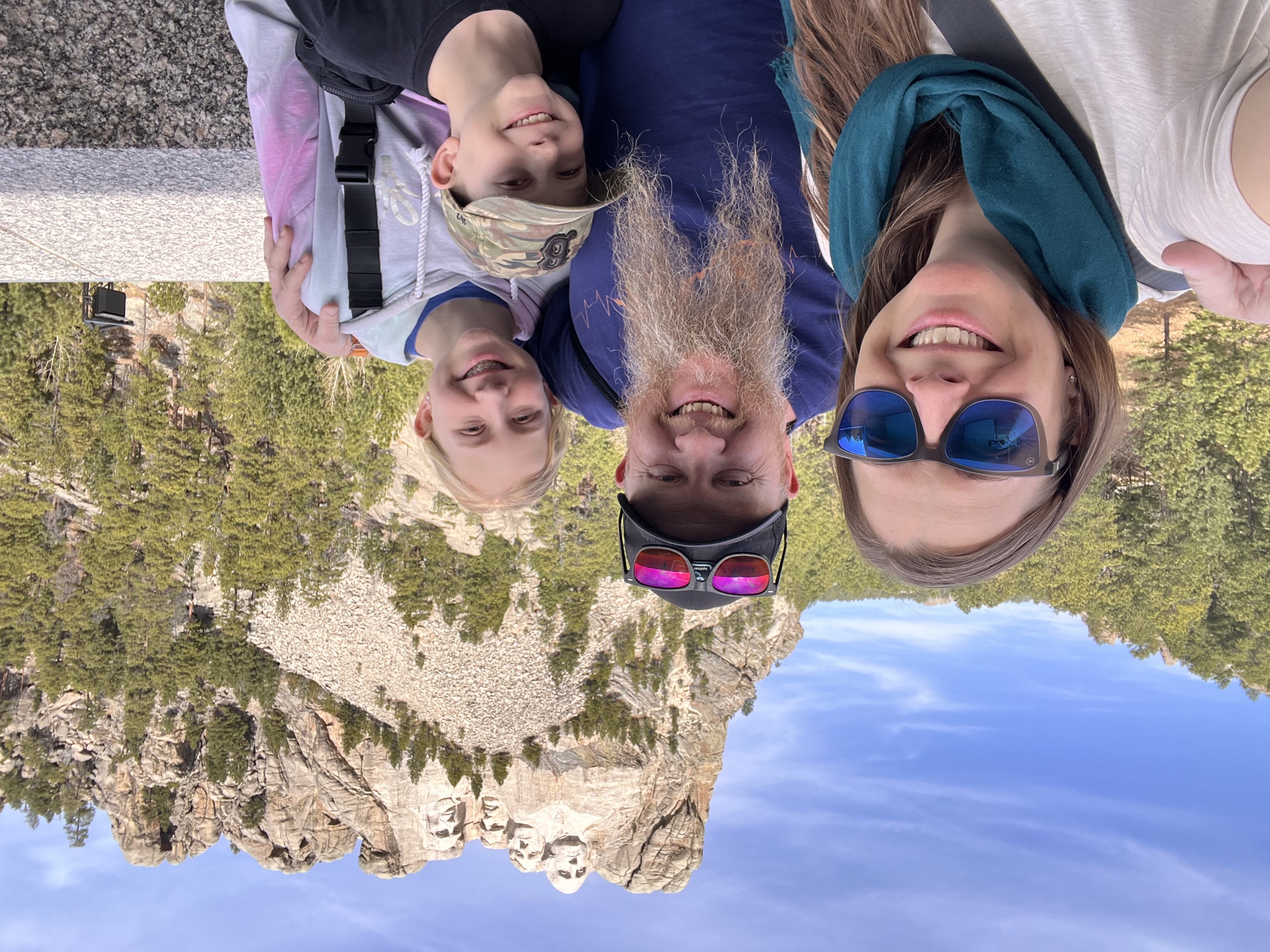
Mt Rushmore was the morning. I'd been here twice before — once as a kid, and once on a road trip moving home from Boulder when my younger sister was moving to California in the other direction; we'd met up to camp for a night before going our separate ways. So I'd had two chances to take the place in. Doing it for the third time, with my own kids, felt different in a way I hadn't expected.
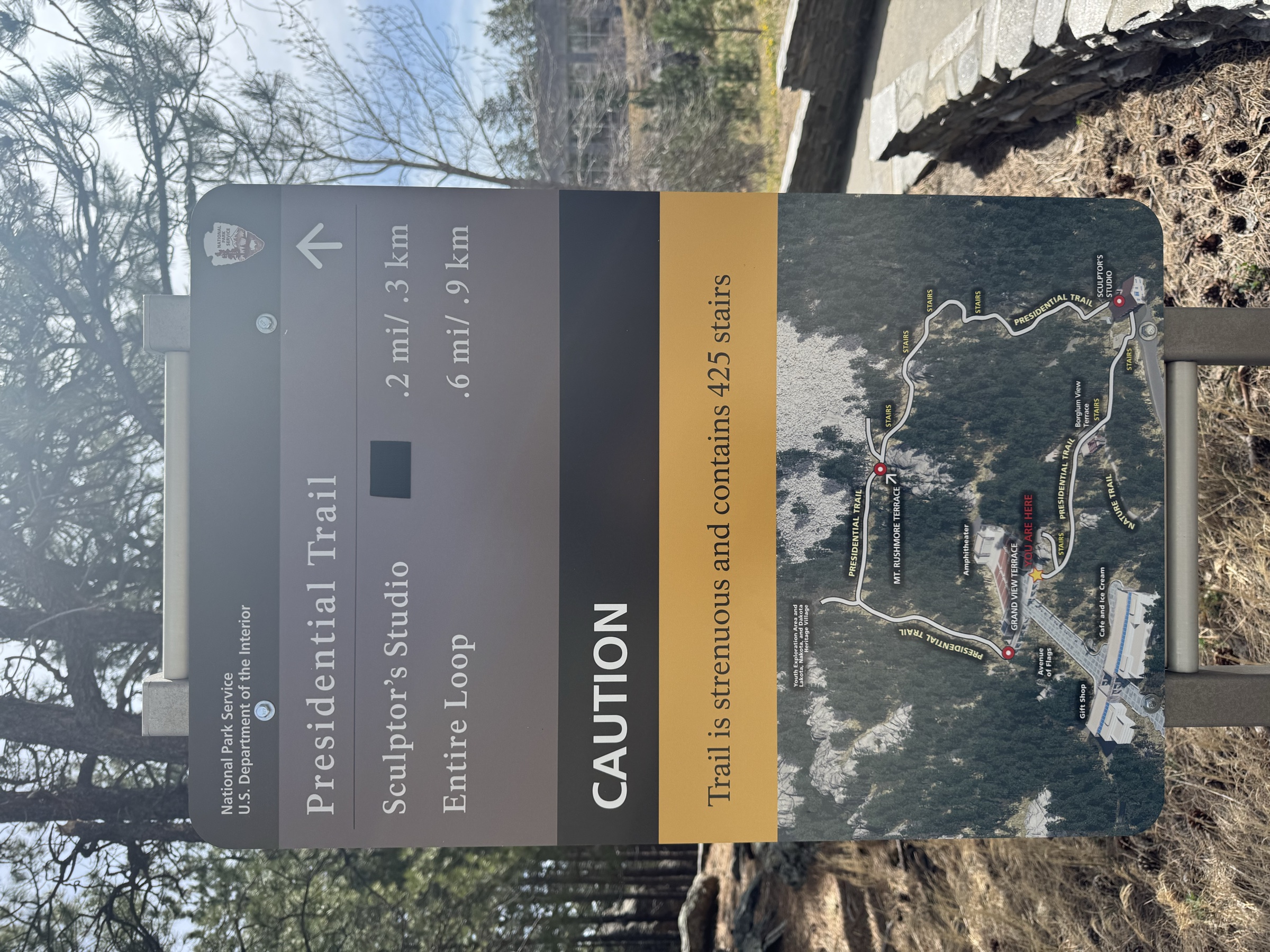
We did the Presidential Trail walk this time — the loop below the carving — which I'd skipped on both earlier visits. Late April, midweek, the place was nearly empty. That was true of every stop we made on this trip: April-and-midweek meant we got the views without the crowds. We had time to stand and look. The kids took it in. Nobody was rushed.
After Rushmore, we got onto Iron Mountain Road. I knew nothing about Iron Mountain Road. ChatGPT had suggested it during planning the night before, and I'd thrown it on the day's loose itinerary because it was right there on the map. It turned into a highlight.
The road climbs and winds through the Black Hills with a series of pigtail bridges — wooden corkscrews where the road loops back over itself to gain elevation — and three narrow rock-cut tunnels that frame Mt Rushmore in the distance as you drive through them. You see the carving framed by stone, you exit the tunnel, you see it again. The road was deliberately engineered for those views. It works.
After Iron Mountain Road we were ready to stop and stretch. The place we'd been hoping to use — a small store along the route — wasn't open yet. We got a little turned around, doubled back, took a side road south, and eventually wound our way to the Custer State Park visitor center on the eastern edge of the Wildlife Loop. We'd packed snacks, so the kids weren't melting down, but we were all looking forward to getting out of the car. The Wildlife Loop reset everything.
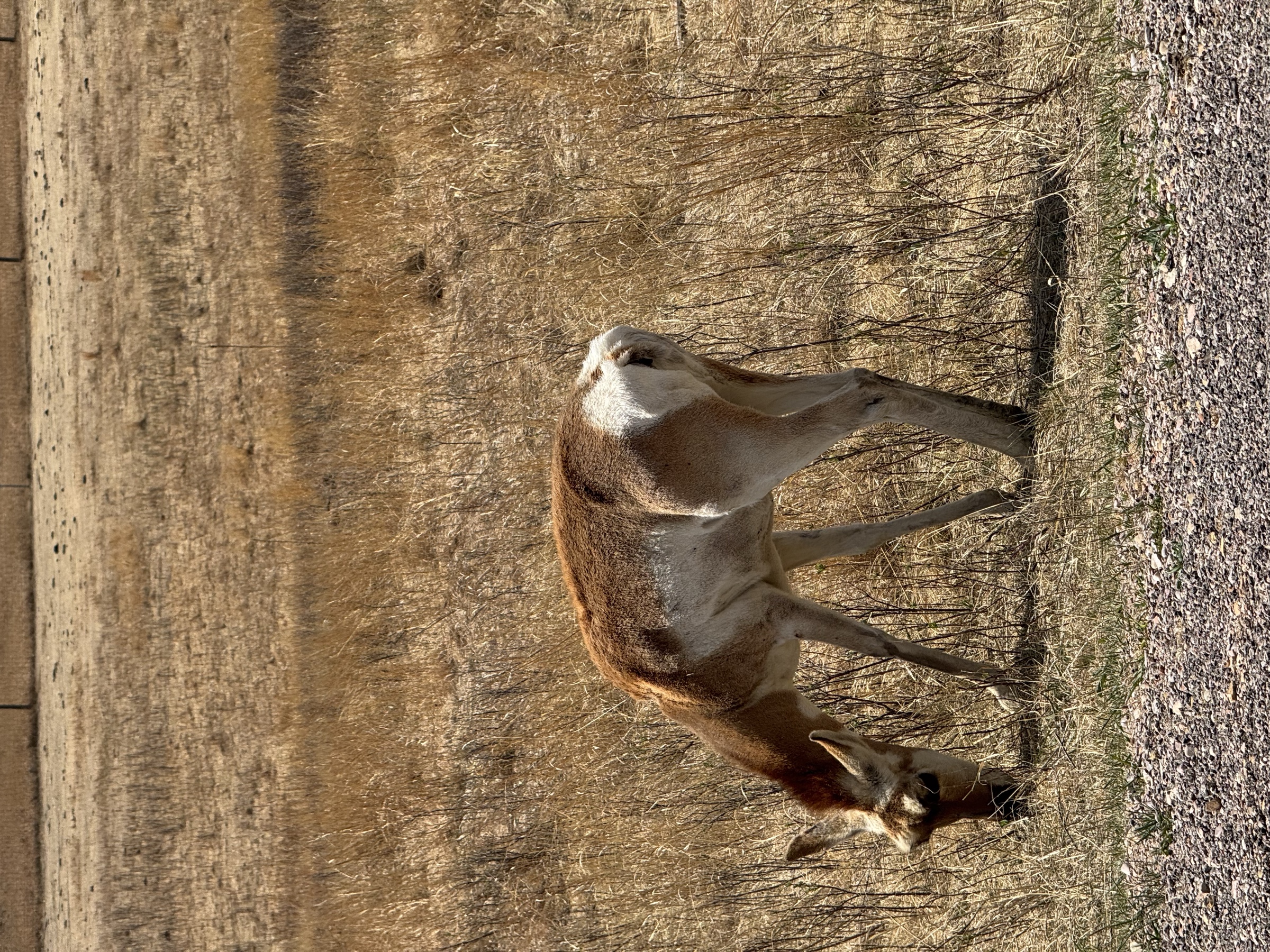
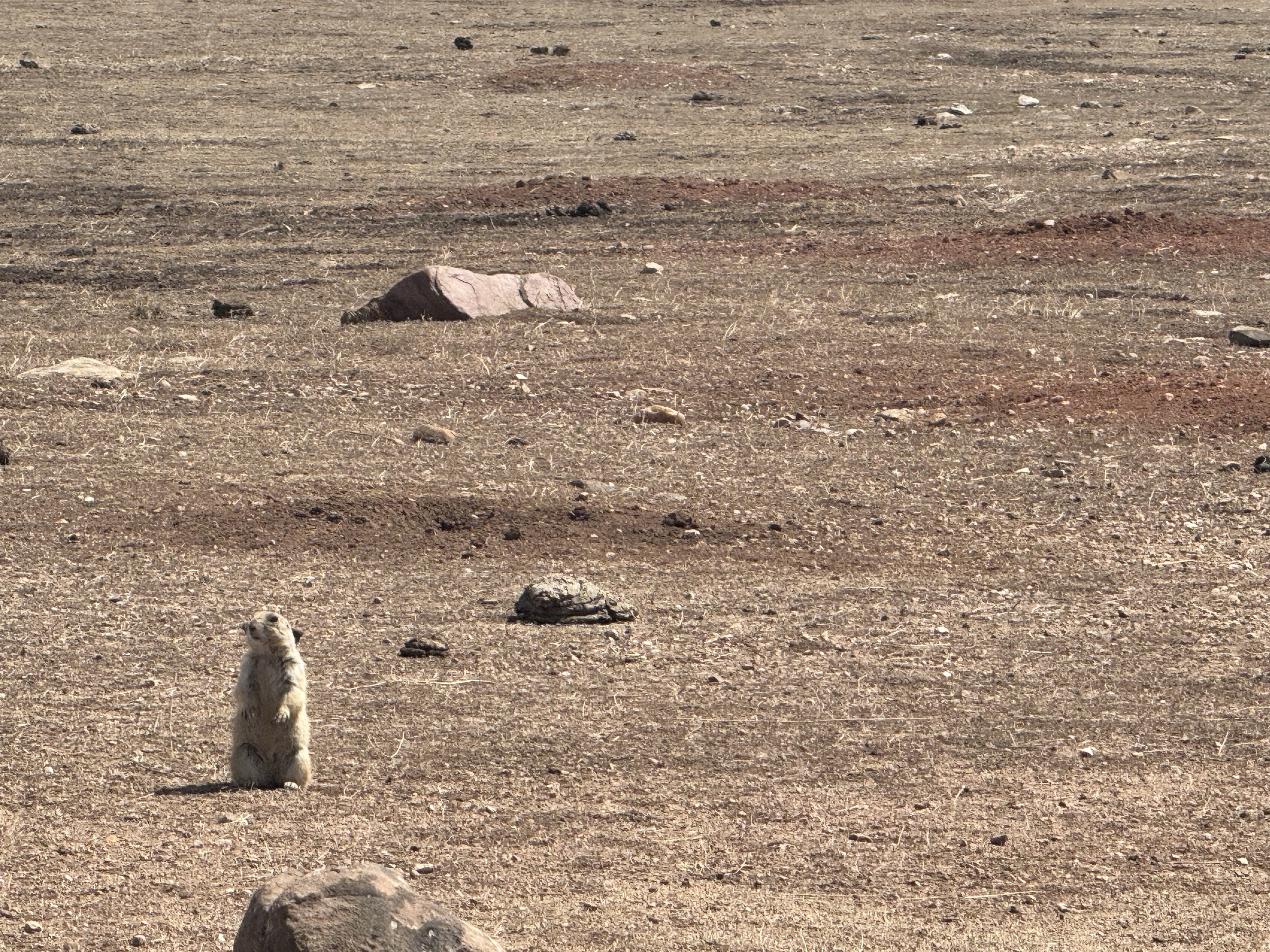
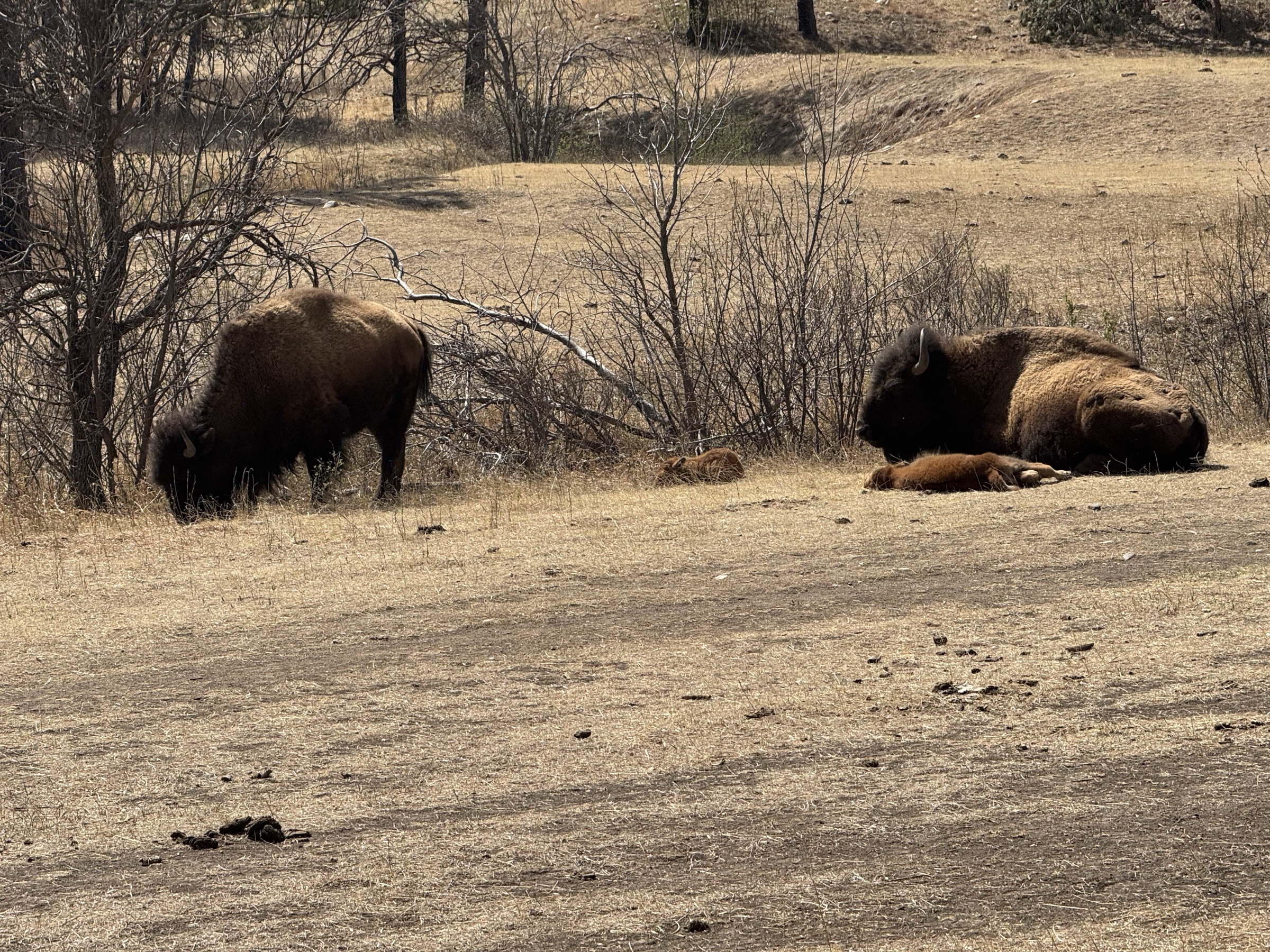
It's an 18-mile scenic drive through the southern part of Custer State Park, and what makes it remarkable isn't the road or the scenery — both are perfectly nice — but the animals. We saw one bison early on, alongside the road, and then nothing for a while: a stretch where there were obvious signs of bison (trampled grass, pies the size of dinner plates) but no actual bison. Then we came around a curve and met the begging burros.
They walked right up to the car. One stuck its head in the open passenger window. Another scratched its head against the side mirror. The kids were delighted. We were stuck in the best kind of traffic jam.
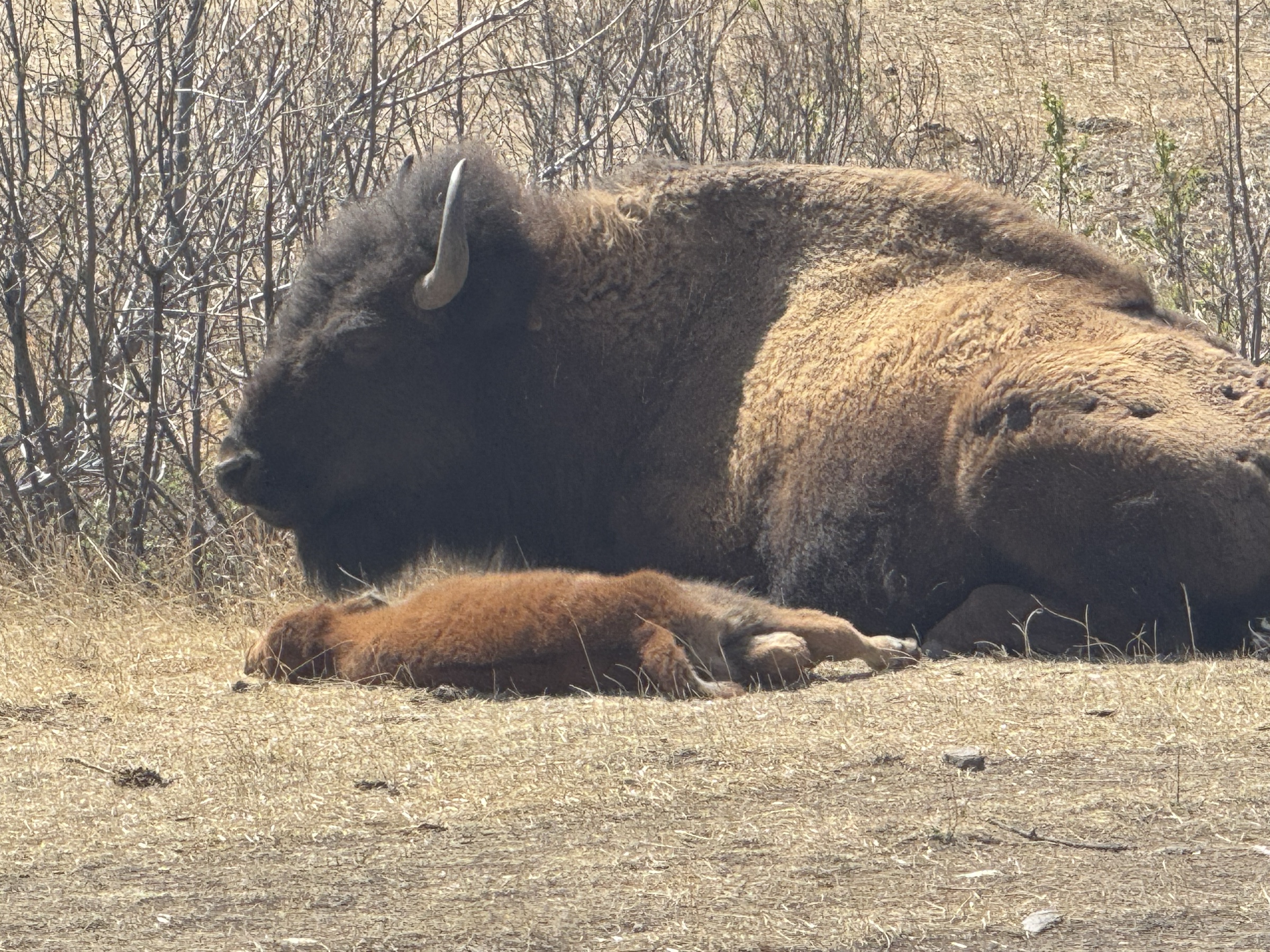
The second half of the loop was bison everywhere — multiple groups grazing alongside the road on our way out. We pulled over more than once to take pictures.
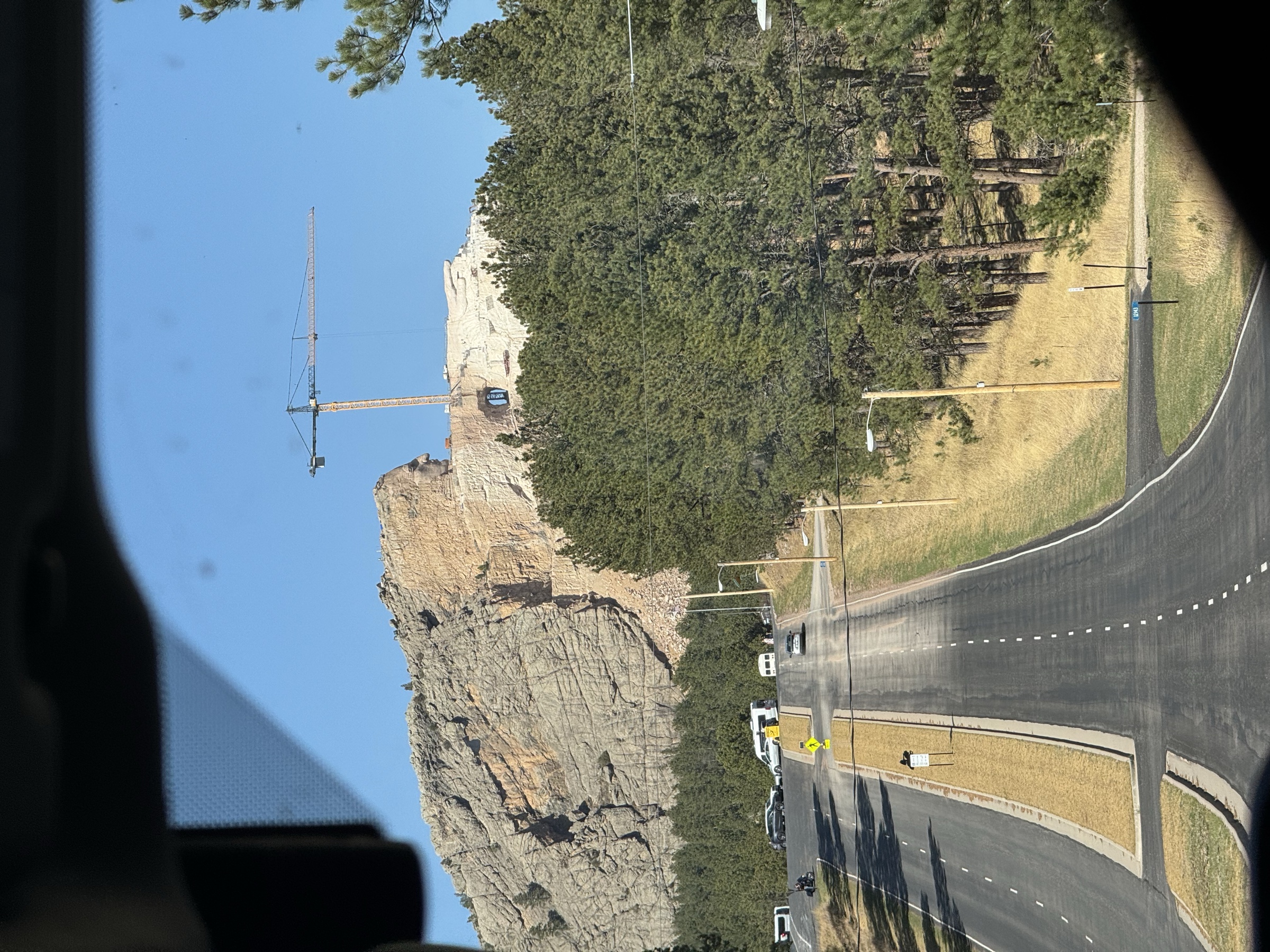
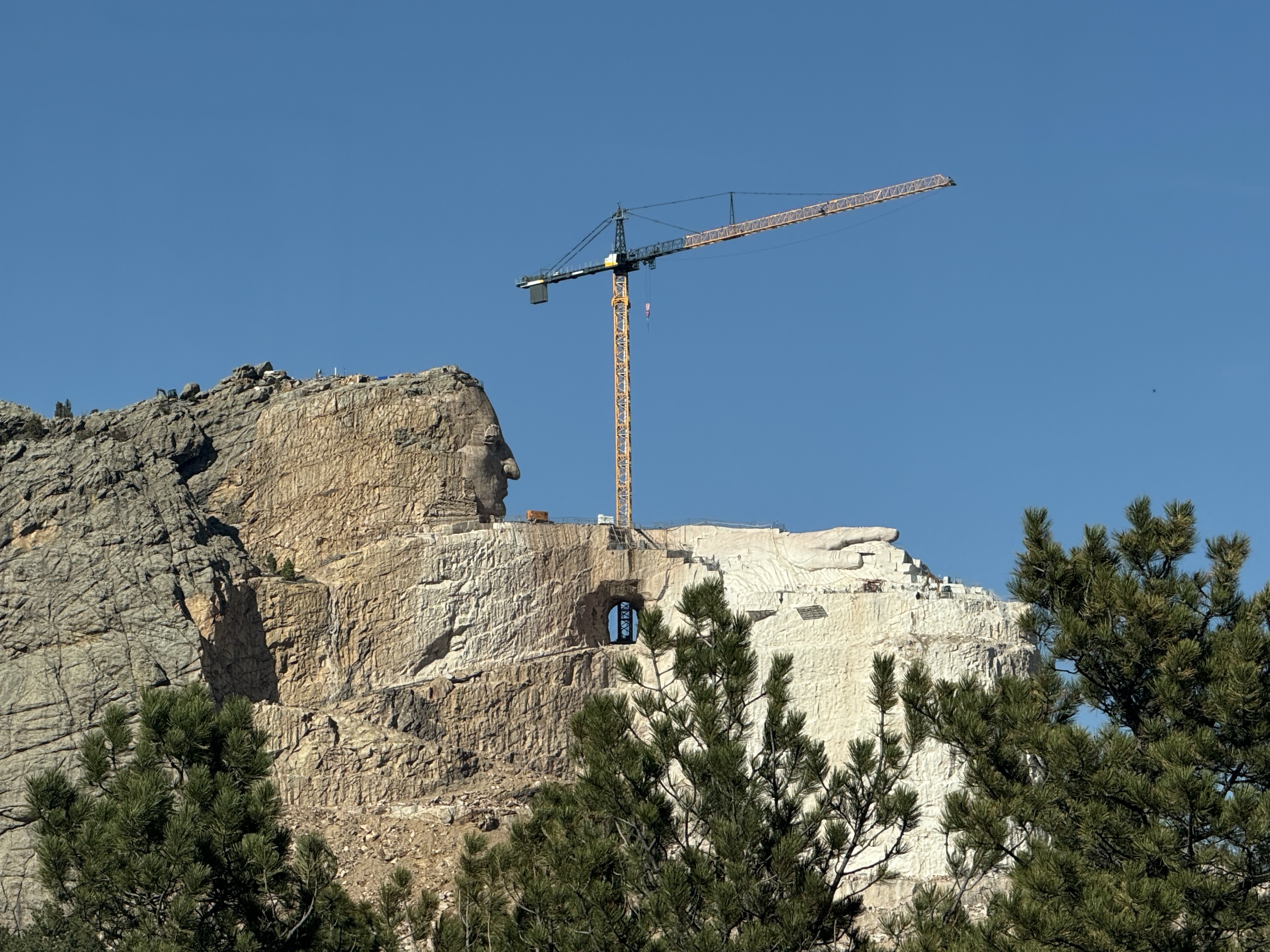
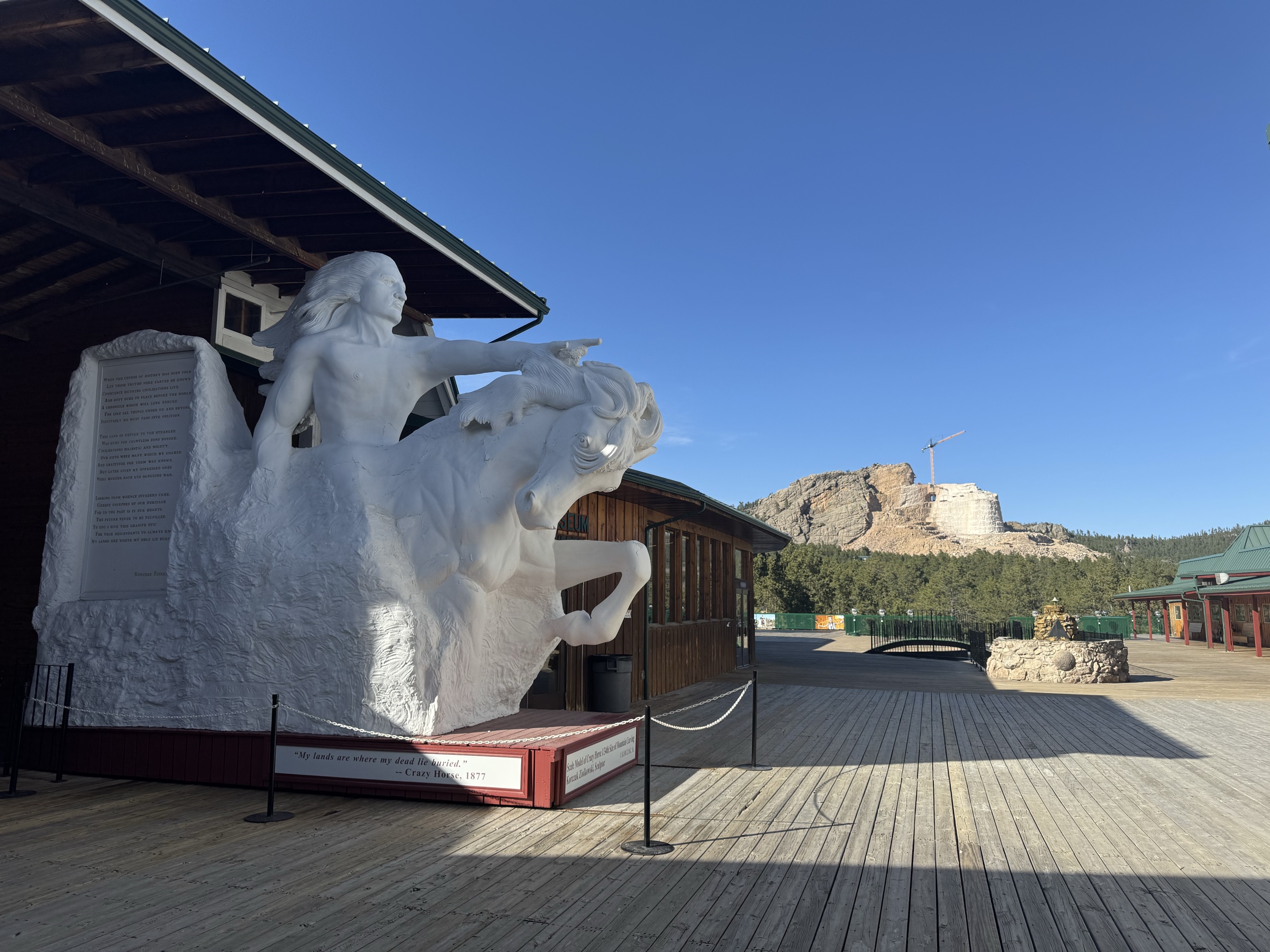
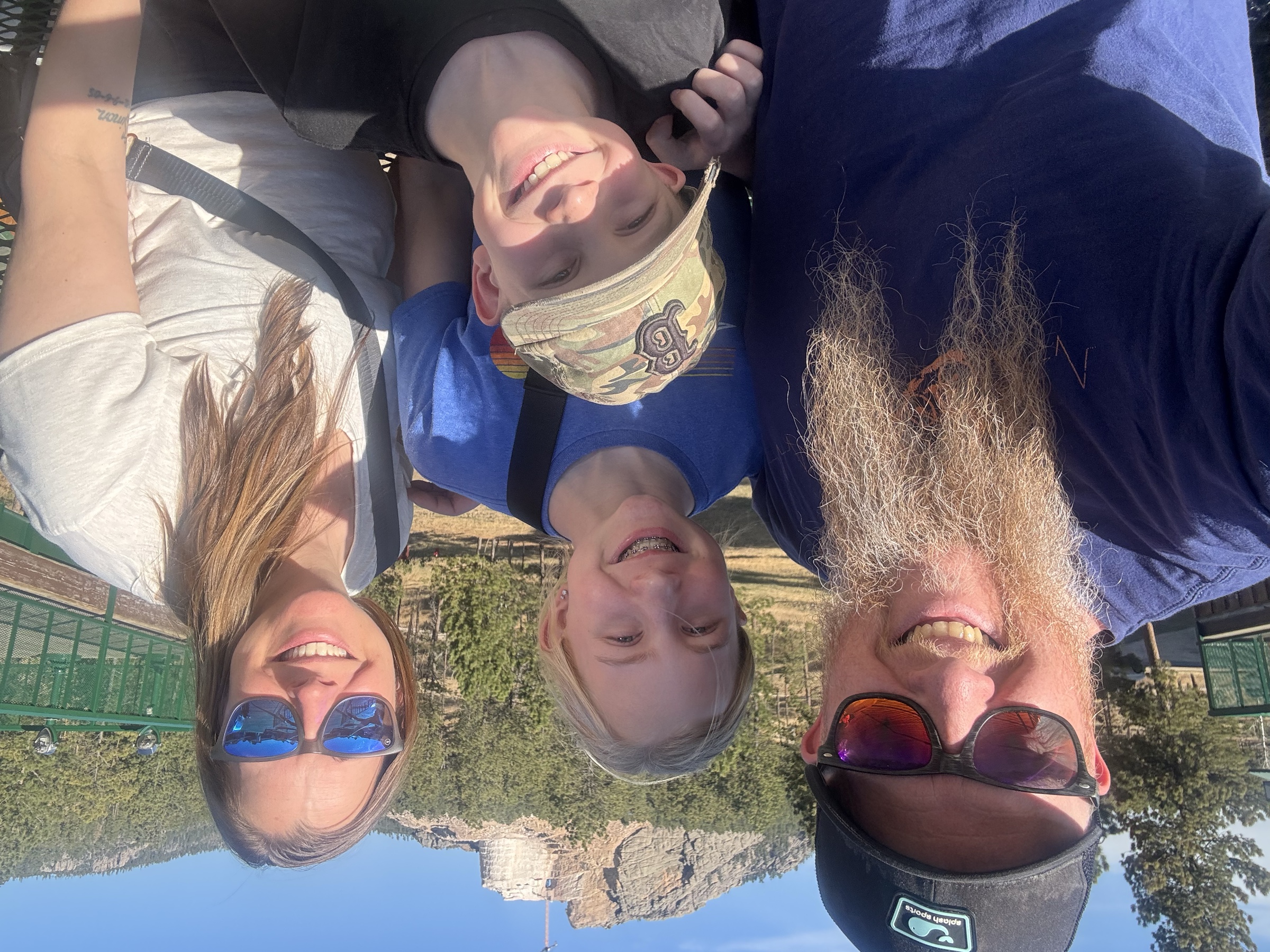
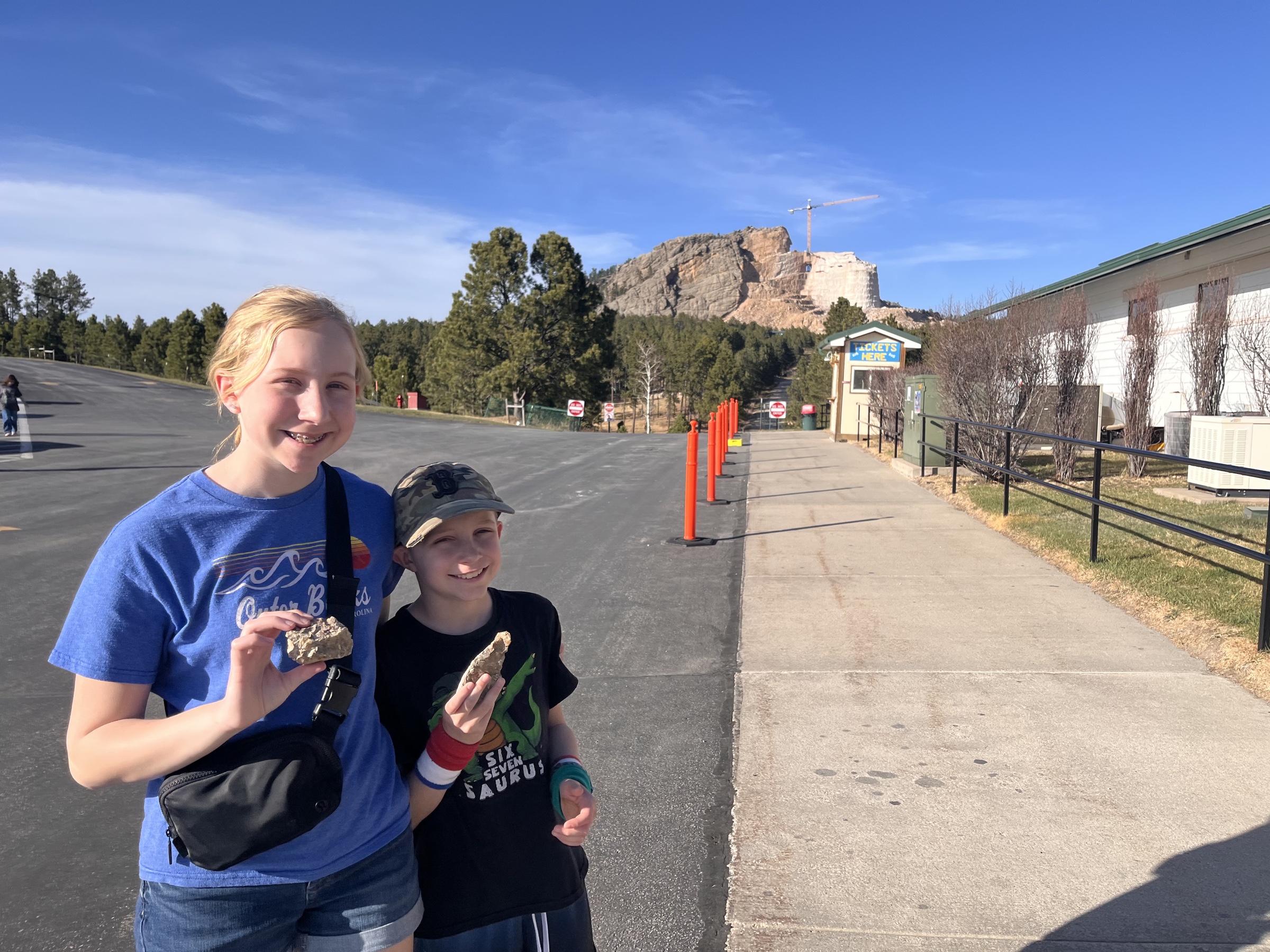
Crazy Horse Memorial was the last stop, and it was the one I'd been wanting to see for years. Crazy Horse has been on my list since long before I could have placed it on a map. Driving up to it, the entrance is a long, straight road with the carving directly in your sight line — about the scale I'd expected, but set farther back than I'd imagined. Part of me had pictured something like Rushmore: stand at the railing, here it is, here you are. Crazy Horse is different. The viewing area sits a long way from the carving. At first that surprised me. After we'd worked through the museum — which is large, deeply researched, and worth the time — it made more sense: the project is taking generations to build, the carving itself is a deliberately slow act of preservation, and the museum is where the real interpretive weight of the place lives.
We watched a film at the site about the project's history. The original sculptor — Korczak Ziolkowski — was Polish-American, born in Boston, and he spent the rest of his life on the carving after starting it in 1948. I came in not knowing much of the history. I found all of it really interesting.
There's a bus that runs visitors closer to the carving for an extra fee. We didn't take it. By the time we'd done the museum and the viewing area, everyone was tired and ready to go. If I come back, I'll take the bus. It's a thing I want to do properly.
We drove back to Mary Jo's in the late-day light. Four stops in one day, and somehow each one was the highlight of somebody in the car at some point.
Tomorrow: Badlands and Cold War history.
Photos from Day 4 13 shots
Click any thumb to open the lightbox. Use ← / → inside the lightbox to step through Day 4's photos.